First-Time Digital Nomad: The Complete Guide to Getting Started
Everything you need to know before becoming a digital nomad — from choosing your first destination to managing finances, staying productive, and building a sustainable remote life.
So You Want to Become a Digital Nomad
The digital nomad lifestyle has gone from fringe to mainstream. Millions of people now work remotely from countries around the world, and the infrastructure — visas, coworking spaces, nomad communities — has never been better.
But the jump from "I want to do this" to actually doing it can feel overwhelming. Where do you go? How much money do you need? What about taxes, health insurance, mail, banking?
This guide covers everything — from the practical logistics to the mindset shifts that make the difference between thriving and burning out. The truth is: becoming a nomad is much simpler than it seems. The hardest part is booking that first flight.
Step 1: Secure Your Remote Income
Before anything else, you need money coming in.
Already working remotely: The easiest transition. Talk to your employer about working abroad. Check your contract for location restrictions.
Freelancing: Platforms like Upwork, Toptal, and Fiverr can get you started, but direct clients pay better. High-demand skills: web development, design, copywriting, video editing, SEO, marketing.
Online business: E-commerce, content creation, SaaS, digital products, coaching. Requires more time to build — don't wait until it's "ready" to travel.
Teaching English online: Companies like VIPKid and Cambly pay $12-25/hour — enough to live well in Southeast Asia or Latin America.
The minimum viable income: You can live in Chiang Mai, Da Nang, or Tbilisi on $800-1,200/month. You don't need $5,000/month to start.
Step 2: Choose Your First Destination
Your first destination should optimize for: low cost of living, established nomad community, good infrastructure, and easy visa.
The top 5 first-timer destinations:
1. Chiang Mai, Thailand — Cheapest, most established community, easiest to navigate. ($800-1,200/month)
2. Bali, Indonesia — Beach + surf lifestyle. Slightly pricier but iconic. ($1,200-1,800/month)
3. Lisbon, Portugal — If you prefer Europe. More expensive but EU access. ($1,800-2,500/month)
4. Medellin, Colombia — Perfect weather, growing community, great value. ($1,100-1,600/month)
5. Da Nang, Vietnam — Beach city with incredible value. ($800-1,200/month)
Use our budget calculator to see exactly what your budget gets you in each city.
Step 3: Handle the Logistics
Flights: Book a one-way ticket. You don't know how long you'll stay. Some immigration wants a return ticket — use BestOnwardTicket ($12) for a refundable booking.
Housing: Don't book long-term from abroad. Book 3-7 nights at a hostel/Airbnb, then find a monthly apartment in person. Facebook groups and local agents offer 50-70% less than Airbnb.
Health insurance: Get proper coverage. SafetyWing ($45/month) is the nomad standard — medical, hospitalization, and emergency evacuation worldwide. Do NOT travel without insurance.
Banking: Get a card with no foreign transaction fees. Wise (TransferWise) is the nomad favorite for multi-currency accounts and cheap transfers.
Phone: Get a local SIM on arrival. Most countries offer $10-15/month for unlimited data.
Mail: Set up forwarding via Traveling Mailbox or a trusted person's address.
Step 4: What to Pack
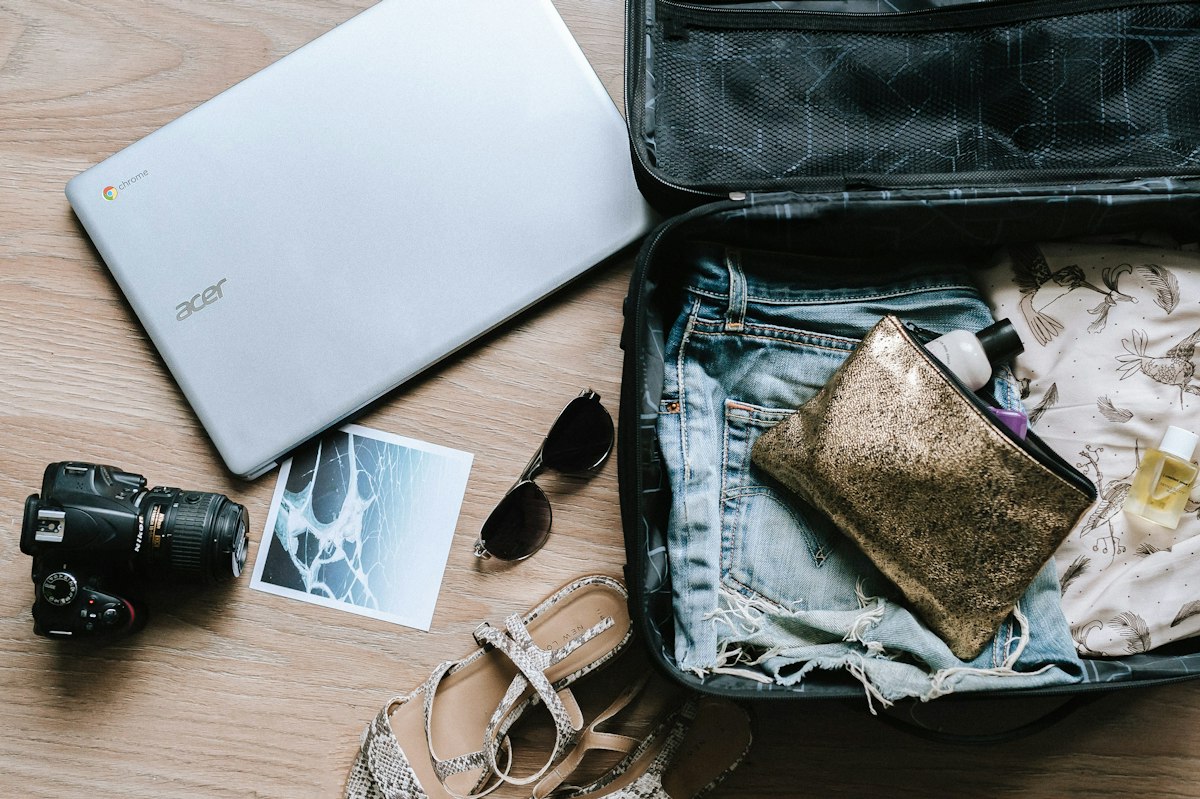
Less is more. Experienced nomads travel with a single backpack (40-50L) or carry-on suitcase.
- Essentials:
- Laptop + charger (your livelihood)
- Unlocked phone
- Universal power adapter
- Noise-canceling headphones (essential for coworking)
- 3-5 days of clothes (laundry is $1-2/kg in Asia)
- Light rain jacket
- Passport + copies of insurance and vaccine records
- Nice to have:
- Portable monitor (productivity game-changer)
- Kindle or e-reader
- Small daypack for daily use
- Packing cubes
- Don't bring:
- More than a week's worth of clothes
- Bulky electronics you won't use daily
- "Just in case" items
- Physical books (use Kindle)
Step 5: Staying Productive on the Road
Establish routines early. Your morning routine is your anchor. Having a consistent start prevents drift.
Use coworking spaces. They provide structure, reliable internet, and social interaction. The cost ($50-200/month) is worth the discipline.
Time zones matter. If your team is in US time zones, Southeast Asia means awkward meeting times. Latin America and Europe are easier for overlap.
Separate work and play. Don't half-work from a beach bar — it's neither productive nor fun. Work hard during work hours, then fully enjoy your free time.
Build a reliable tech setup. Backup internet (mobile hotspot), cloud storage for everything, VPN for security on public WiFi.
Combat loneliness. The #1 reason nomads quit. Join coworking communities, attend meetups, use Bumble BFF. Building a social routine is as important as building a work routine.
Step 6: Money & Taxes
Budgeting: Track spending for the first month. Use YNAB or a spreadsheet. Most first-timers overspend in month one then calibrate. Our budget calculator gives realistic targets.
Currency management: Wise is the gold standard. Multi-currency account, real exchange rates, debit card worldwide. Avoid airport exchange counters.
- Taxes: The most complex part. The short version:
- You're likely still a tax resident of your home country (US citizens are taxed on worldwide income regardless)
- Some DN visas (Croatia, Georgia) explicitly exempt foreign income
- Consult a tax professional who understands nomad situations
- Keep records of everywhere you stay and for how long
Don't ignore taxes. Budget $500-1,000/year for a tax professional if your situation is complex.
Common First-Timer Mistakes
Moving too fast. Stay at least 3-4 weeks in your first destination. Moving weekly means you never settle in and burn money on transport.
Overpacking. You need 5 outfits and a laundry service, not 15 outfits.
Skipping insurance. A medical emergency abroad without insurance can cost tens of thousands. $45/month for SafetyWing is the best money you'll spend.
Working from your apartment all day. Fast track to isolation. Get out. Work from cafés and coworking spaces.
No financial buffer. Things go wrong — flights canceled, laptops break. Keep 2-3 months of expenses as safety net.
Ignoring health. New food, climate, jet lag, and stress take a toll. Stay hydrated, exercise, sleep properly.
Your First 30 Days: A Blueprint
Days 1-3: Arrive and decompress. Get a local SIM. Walk around. Find a good café. Don't pressure yourself to be productive.
Days 4-7: Visit 3-5 apartments in person. Negotiate monthly rates. Move in. Set up your workspace.
Days 8-14: Try 2-3 coworking spaces. Establish morning routine. Find your favorite café, restaurant, and gym.
Days 15-21: Attend a nomad meetup. Join local groups. Say yes to every social invitation. This is when loneliness hits hardest — push through it.
Days 22-30: Evaluate and adjust. Tweak your budget, workspace, and schedule. Decide if you stay another month or plan your next stop.
The first month is the hardest. After that, the lifestyle clicks. You'll wonder why you didn't start sooner.
Ready to find your first destination? Try our budget calculator to see what your budget gets you worldwide.
Frequently Asked Questions
How much money do I need to start as a digital nomad?+
A good rule of thumb is 3-6 months of expenses saved as a runway, plus your first month's costs. For Southeast Asia, that's roughly $3,000-7,000. For Europe, $6,000-12,000. Don't wait for a perfect number — many nomads start with less.
What's the best first destination for digital nomads?+
Chiang Mai (Thailand), Bali (Indonesia), Lisbon (Portugal), and Medellin (Colombia) are the most popular first destinations. They all have established communities, good infrastructure, and affordable costs.
Do I need special skills to be a digital nomad?+
You need a way to earn money remotely. Common paths include: software development, design, writing, marketing, teaching English online, virtual assistance, freelancing, or running an online business.
Related Articles

Find your ideal nomad city
Use our budget calculator to see which cities match your monthly budget — housing, food, coworking, and more.